Traveling with a baby adds another dimension to your travel experience, especially when it comes to safely preparing and feeding infant formula during travel. If you’re wondering about how to travel with infant formula to keep your baby (and yourself) happy, you’re not alone.
Here at Nara, we’ve gathered our best advice for traveling with infant formula so that you can get to your destination well-prepared — and so that your baby stays well-fed.
Traveling with infant formula tip #1: Use prepared formula quickly or store it appropriately
Whether you’re traveling this holiday season or staying at home, the guidelines from the Centers for Disease Control and Prevention (CDC) for the preparation and storage of infant formula remain the same: use prepared infant formula within 2 hours of preparation and within 1 hour after a feeding begins.
If you don’t plan to feed within 2 hours after preparing a bottle, guidance from the CDC states that, immediately after preparation, you should store the prepared bottle in the refrigerator and use it within 24 hours.
Be sure to throw out any prepared formula that is left in the bottle after feeding your baby or that hasn’t been used within the 24-hour after-preparation window if the formula was refrigerated right after preparation.
Of course, always be sure to wash your hands before preparing bottles and feeding your infant, and ensure that you’re preparing the formula in a clean space and using clean feeding equipment.
Tip #2: Going through airport security/TSA with infant formula
If you’re traveling across the United States and plan to bring infant formula on a plane, you may be wondering about how to get through airport security with enough infant formula for your trip.
The Transportation Security Administration (TSA) confirms that infant formula can be packed in your checked bags. That means both opened and unopened cans of powdered infant formula can be checked, along with ready-to-drink formula.
You can also carry-on infant formula, even infant formula that’s already been prepared. Since infant formula is medically necessary for your baby, carrying it on in quantities larger than the usual 3.4 ounces (or 100 milliliters) is permitted. Your formula and bottles don’t need to fit into a quart-sized bag, either.
While going through airport security, you’ll need to notify the TSA officer at the beginning of the screening process that you are carrying formula and remove it from the rest of your belongings. Having your prepared formula in clear, translucent bottles is suggested.
TSA officers may need to test your bottles, but their website states they will never place anything into the formula. If you don’t want the formula opened, you can inform the officer and undergo other screening procedures.
Tip #3: Keeping formula cold while flying
You might be wondering about how you will keep prepared infant formula cold during travel in order to comply with CDC’s guidance to store prepared formula for up to 24 hours in the refrigerator.
For air travel, TSA confirms that you are allowed to bring ice packs or other items required to keep your formula cold. Be sure that any cooler bag and ice packs keep your formula at a refrigerator-like temperature, which is no more than 40℉ (4℃). You can add a portable thermometer to your cooler to ensure your formula is stored at the appropriate temperature.
However, please be advised that temperature fluctuations can lead to fouling of the formula or provide opportunities for bacteria to germinate, so properly controlled storage options for prepared formula is important. Any formula that is unused within the 24-hour refrigeration window should be discarded.
Tip #4: Prepare each bottle in flight
If carrying a cooler of prepared formula through the airport seems like a hassle, you may instead choose to prepare formula after getting through security and at the time your baby needs their bottle. To do this, you’ll need to bring powdered formula that hasn’t been mixed with water. You could bring an entire can with you in your carry-on.
Some families like the convenience of using clean formula dispensers, which have small compartments that store pre-measured powder. These compartments can be individually dispensed into each bottle at each feeding. Dispensers can be a potential source of contamination, so be sure to properly clean them before using.
If you choose to prepare formula at each feeding, once through security, plan to get the water you’ll need to prepare your formula for the duration of your flight. If you didn’t bring water with you through security (which is allowable in reasonable quantities if it’s designated for your baby and screened separately from the rest of your belongings), you’ll need to find water available for purchase.
As always, use water from a clean and safe source and ensure that all utensils that come in contact with formula preparation are clean. Always prepare the formula in a clean space and remember to not contaminate any utensils or scoops during preparation.
Tip #5: Follow safe practices if traveling by car
The same rules for safe formula preparation and storage apply if you’re traveling by car: be sure to use prepared formula within 2 hours after preparation, within 1 hour after a feeding begins, or if refrigerated (or in this case, in a cooler) stored for up to 24 hours.
As mentioned, if you are using a cooler, please be cautioned that temperature fluctuations during storage affect formula safety. Remember to discard any formula that is not consumed within 24 hours of refrigeration/cold storage.
Traveling by car means you don’t have to worry about getting your items through security. This means that you can bring water or prepared formula from home without worrying about screening procedures. You may also have extra room to haul more gear, like a cooler for prepared formula or cases of water to mix formula while you’re on-the-go.
Remember, it’s unsafe to feed a baby in their carseat, so find a rest stop, a tourist destination, or a cozy restaurant along the way to give your baby their bottle.
Tip #6: Pack enough infant formula – plus extra.
Be sure to pack enough bottles and formula for your entire travel time – plus some extra, just in case. To keep unused and used bottles organized, some parents like to bring a bag designated as a “clean bag” and a bag designated as a “dirty bag.” Plan on cleaning your dirty bottles when you arrive at your destination.
For longer trips, you might also consider shipping formula directly to your destination, or relying on local stores to pick up formula when you arrive.
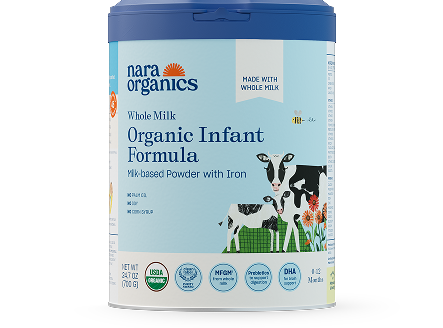
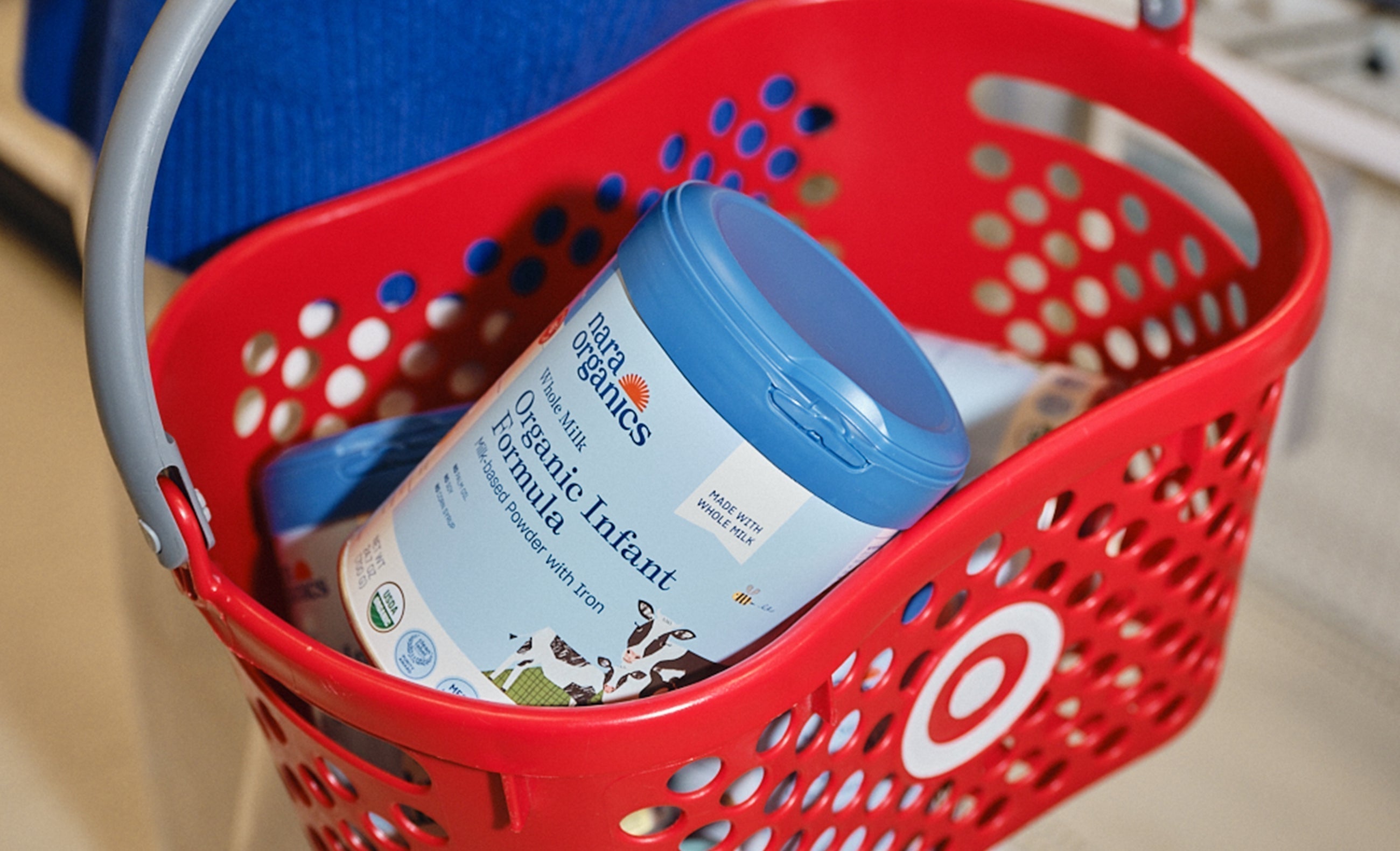
Big news: Nara Organics is now available at Target stores nationwide. Perfect for stocking up on formula during travel.
Tip #7: Preparing infant formula at your destination
When you arrive at your destination, it can be helpful to establish a dedicated formula preparation zone (a clean space to prepare your baby’s bottles) as well as a bottle washing station (a dedicated spot to wash and dry feeding equipment, and sterilize if necessary).
As always, be sure to prepare your formula with water from a safe source. The American Academy of Pediatrics states that tap water is usually safe, and if you need extra reassurance or are unsure, you can contact the local health department at your destination if you are traveling in the United States to verify.
Tip #8: Ensure that caregivers know how to safely prepare infant formula
If you’re traveling to see loved ones, you’ll likely get the added benefit of extra hands to help prepare your baby’s bottles. What a perk! Just be sure that anyone preparing your baby’s formula always reads and follows label instructions. That means they’ll need to use clean hands, workspaces, feeding equipment, and water.
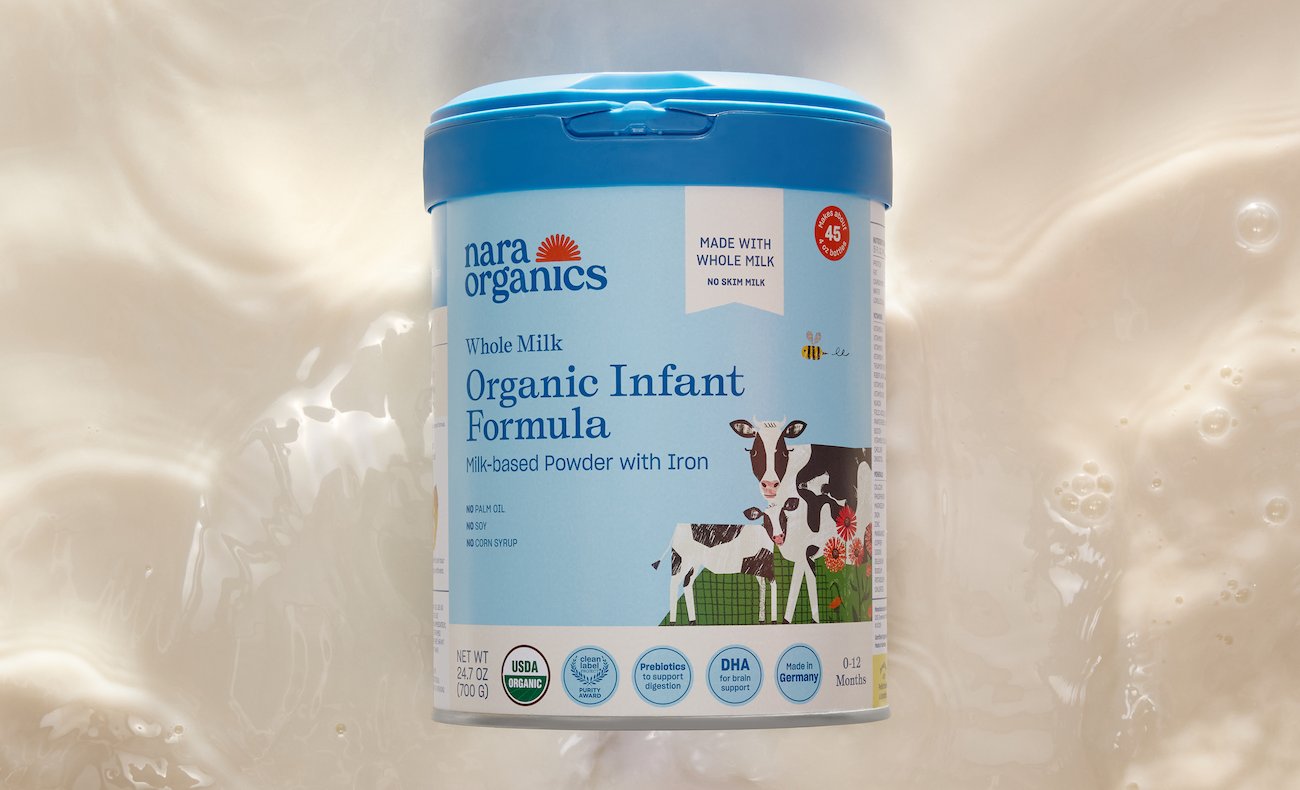
Nara Organics follows a 1:1 powder to water ratio, which means you add one scoop of formula for every ounce of water. Instruct caregivers to always use the scoop provided in the can -- not scoops from a different brand and or from a household utensil like a spoon. They may also need a reminder to never use a microwave to heat formula, since it can create dangerous hot spots, and to always test the temperature of warmed formula before feeding.
Tip #9: Pack the right gear - and the right amount of it!
Depending on how you’re traveling, and depending upon your baby’s preferences, here’s a list of essential infant feeding and bottle cleaning items to consider adding to your travel packing list:
For Feeding and Formula Preparation:
- Infant Formula: Pack enough formula for your entire trip, plus extra in case of unexpected circumstances.
- Formula Dispenser: Load one with pre-measured powdered formula in separate compartments for easy mixing while on-the-go.
- Water: Bring water specifically for preparing the formula. When using water from other sources, check for water quality and ensure it is clean and safe for formula preparation.
- Temperature Control:
-
Insulated Cooler: Use an insulated cooler with ice packs to keep prepared formula cold for up to 24 hours. Include a thermometer to ensure the temperature stays below the safe limit of 40℉ (4℃).
Warming Option (if needed): If your baby prefers warm formula, pack a portable bottle warmer or a thermos with warm water. -
Remember: Never use a microwave to heat formula, since it can create dangerous hot spots, and to always test the temperature of warmed formula before feeding.
-
-
Bibs or burp clothes for messy feedings.
For Bottles and Cleaning
- Clean Bottles: To ensure you have plenty of clean bottles available, plan out how many your baby will go through while you’re traveling, plus a few extra. Clear, translucent bottles are recommended if you plan to go through TSA’s security checkpoints with prepared formula.
- Clean nipples, caps, and rings.
-
Cleaning Supplies
- A clean basin or bowl to be used only for cleaning feeding equipment after you arrive at your destination
- Soap for washing all feeding equipment (travel-sized soap is available
- Bottle brush for cleaning bottles (travel-sized brushes are available).
- Fresh clean paper towels to air dry items.
- Sterilizing: Bring sterilizing bags for use in a microwave, if needed.
Tip #10: Know the guidelines for traveling abroad with infant formula.
If you’re traveling internationally, review guidance from other countries on how formulas should be handled and transported as each country may have different standards. Check the customs regulations for your destination country and contact your airline with any questions.
Some countries have regulations regarding the import of baby formula, and they may restrict certain brands. This means that the specific formula you are feeding your baby may not be available for purchase in a different country, and if it is, its nutrients or ingredients may vary from what is available in the United States and its labels may not be in English.
Before you leave, it could be worth it to talk to your child’s healthcare professional in advance about options available abroad, just in case you happen to get in a pinch while you’re there. This is especially true if your baby is on a specialized formula, like one that is labeled hypoallergenic in the US. Formula labeled hypoallergenic in some other countries may not be suitable for milk allergic infants as they may not be made with the right kind of protein ingredients (extensively hydrolyzed proteins). All of this could create challenges or confusion, which could be avoided by packing enough formula from home.
If you do end up needing to purchase a formula while in a new country, know that in some countries, formula is available only at a pharmacy or you may need to ask the pharmacist for the formula as it may not be stocked on the shelf. When selecting an infant formula internationally, it may be preferable to choose a formula from the same brand (if it’s available). If your particular brand is not available, choose the one with the list of ingredients closest to the one your baby is used to. Your baby may require some adjustment to any new formula.
Always use water from a safe source when preparing formula and cleaning your feeding equipment internationally. Before your trip, check if your destination has access to clean water for formula preparation.
Other resources and tips for traveling with infant formula
Expect that traveling with a baby will take extra time and thoughtful planning, especially when it comes to infant formula. Sticking to safe preparation guidelines, understanding specific travel requirements for formula, and packing all the feeding gear you need can support a smooth travel experience. You’ve got this!
Late night travel keeping you up? Read more about other parents’ experience with Nara – and share your story, too.
Need more feeding support during your travels or have a travel tip to share? Connect with us at hello@nara.com.